
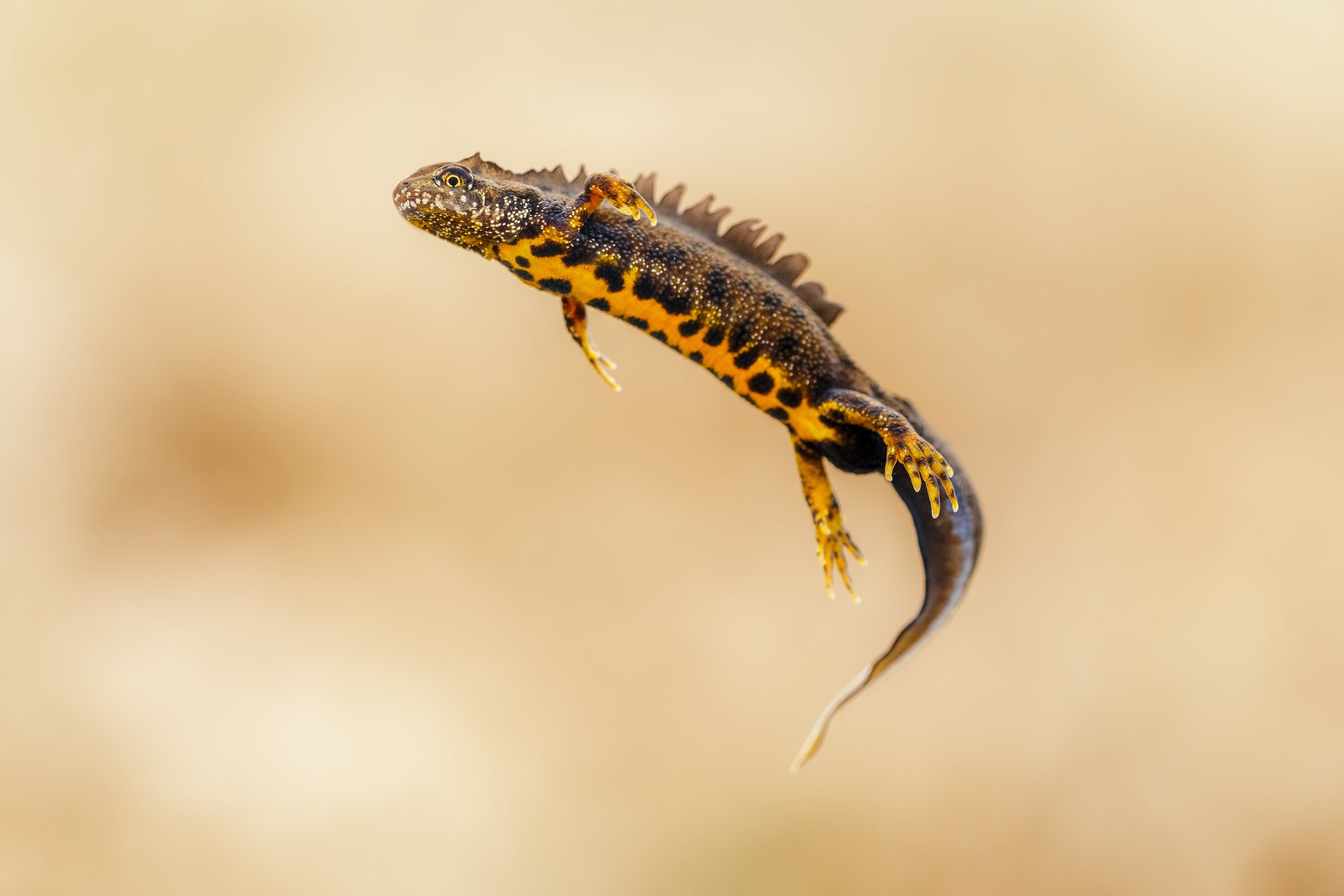
Great Crested Newt Surveys
GCN & the Law
Great crested newts in the UK are protected under the Wildlife and Countryside Act 1981 (as amended) and the Conservation of Habitats and Species Regulations 2017. It is an offence to intentionally kill, injure, disturb, or take newts, or to damage, destroy, or obstruct access to their breeding or resting sites without an appropriate licence.
Early ecological assessment helps identify whether newts or suitable habitat are present and avoids legal or planning issues. Survey results support planning applications and, where necessary, mitigation and licence applications.
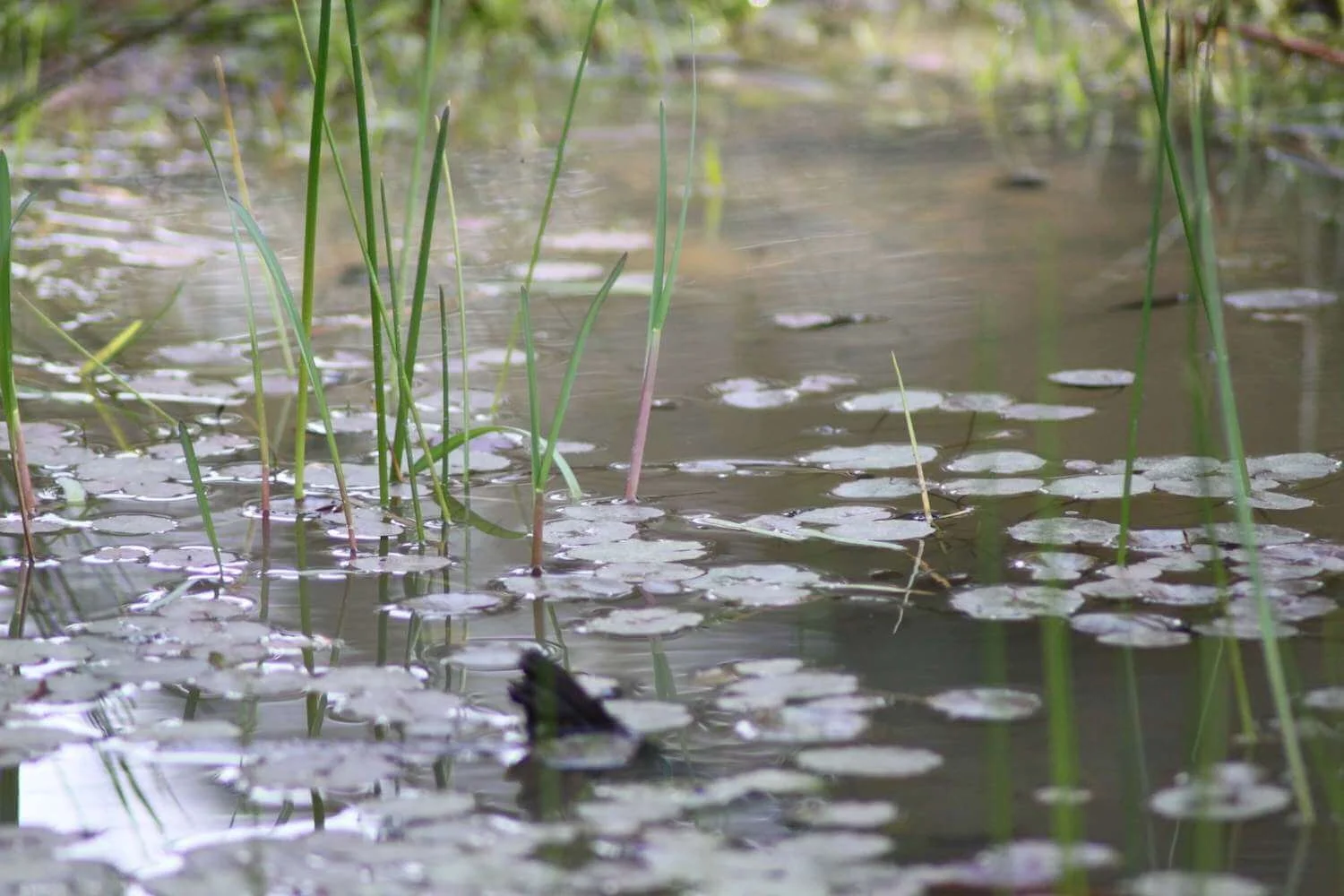
When is a Great Crested Newt Survey Required?
Newt surveys are typically required where development could affect ponds or terrestrial habitats used by newts. Common triggers include:
Works near ponds, water bodies, ditches or wetlands
Vegetation clearance, earthworks, or soil stripping within 250 m of a potential pond
Removal of suitable terrestrial habitat such as hedgerows, grassland or scrub
Residential or commercial developments with ground disturbance
Even if no newts have been recorded previously, the presence of suitable breeding or terrestrial habitat can trigger the need for survey evidence to support planning submissions.
Habitat Suitability Index
If a waterbody is identified within 500 m of a proposed development, a Habitat Suitability Index (HSI) assessment will be undertaken. This is a standard methodology used to score a pond’s suitability for supporting great crested newts, based on ten characteristics of the pond and surrounding habitat. HSI assessments can be carried out at any time of year. Where a pond is assessed as having ‘moderate’ suitability or above, further seasonal survey work may be required.
Survey Assessment
Phase II eDNA analysis
Environmental DNA (eDNA) surveys are a method of detecting great crested newts by collecting water samples from ponds and analysing them in a laboratory. Because great crested newt DNA persists in water for a relatively short period (approximately 20 days), samples must be collected during the appropriate survey season, typically between mid-April and the end of June.
eDNA surveys are a cost-effective way of establishing likely absence; however, they do not provide information on population size. Where an eDNA result is positive, further Phase II surveys are required to inform impact assessment and any subsequent European Protected Species Licence application.

A typical great crested newt survey may involve:
Habitat assessment to identify ponds and surrounding terrestrial features
Presence/absence surveys using standard methods such as bottle trapping, torching or netting (where appropriate)
Identification of breeding and terrestrial habitat use
Population assessment and mapping where necessary
Recommendations for mitigation and licence support, if required
Survey scope is tailored to the site, habitat type, and development proposals, ensuring proportionate and planning‑relevant results.
What a Newt Survey Includes
Newt Surveys & Planning Applications
Newt survey reports are prepared to support planning submissions and to inform ecological assessments. They help Local Planning Authorities assess potential impacts and determine appropriate mitigation and, where necessary, whether a European Protected Species licence is required for development.
Phase II surveys
Due to the level of protection for GCN, surveys can only be undertaken by an appropriately licensed worker.
If newts are found on site then we will create a mitigation strategy that will need to be submitted to the Local Planning Authority detailing measures that will be taken to lessen harm or killing of reptiles on site. Where appropriate a suitable area is retained on site and reptiles within the impacted area are captured and released within the chosen receptor site. Ecosupport can enhance your site for reptiles through habitat management and installation of hibernacula within the site.
Traditional survey methods for GCN will take place during early spring when the newts will return to their ponds to breed. A number of methods can be employed, dependent on the features of the pond, but these typically include:
Torching
Bottle trapping
Searching macrophytes for eggs
Netting

Licence & Mitigation
If GCN are found in the proximity of the site and their terrestrial or aquatic habitat will be impacted in any way, a European Protected Species Licence and appropriate mitigation will be required before works can be undertaken. Often, a GCN translocation is required if works will impact their terrestrial habitat.
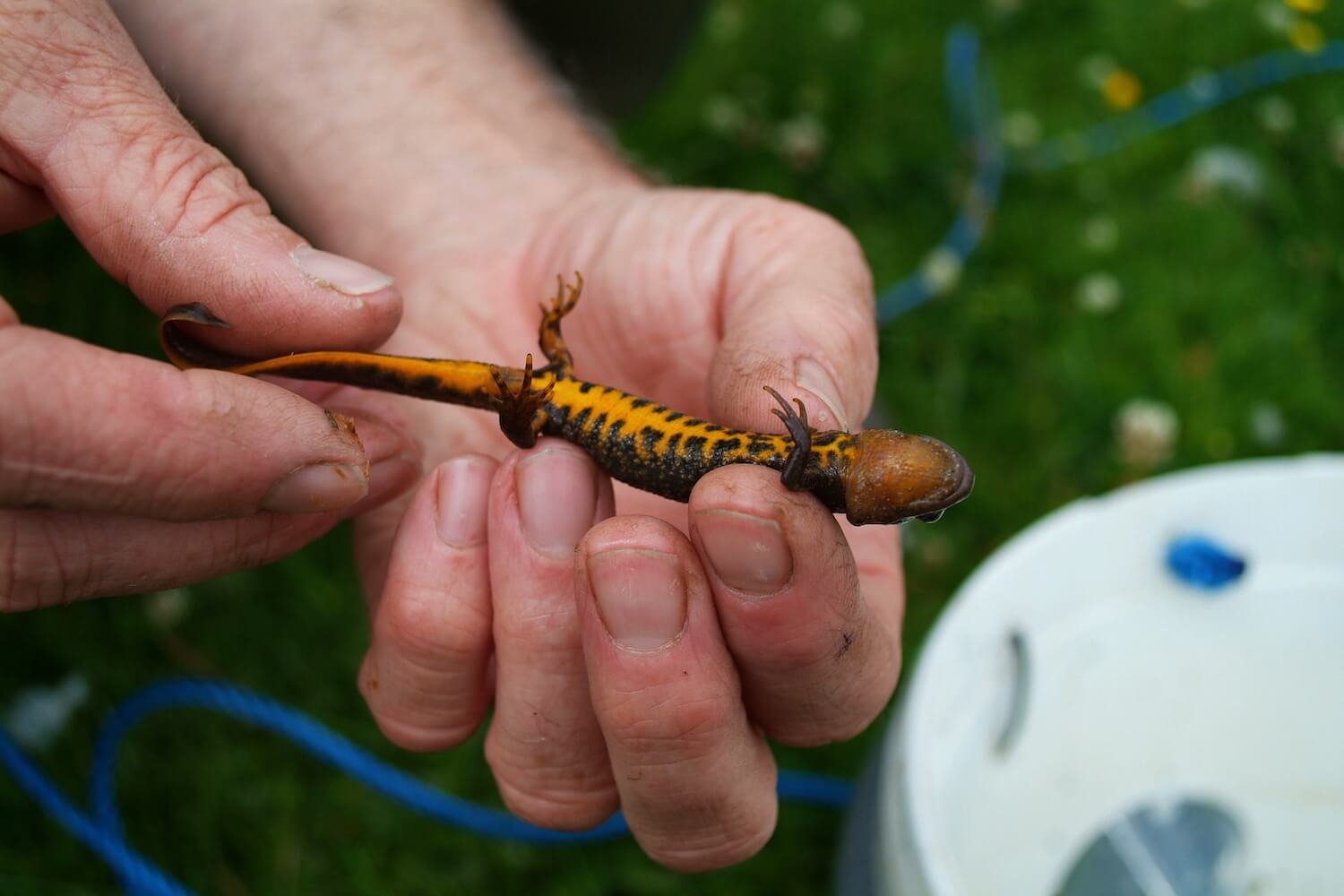
Our experience
We have several team members who are licensed to undertake GCN work including survey and mitigation and we have a successful history of undertaking all appropriate requirements under an EPS licence.
In addition, our habitat management team can enhance your site for GCN and is well-equipped to create new habitat with enhancements such as the installation of wildlife ponds, hibernacula and increasing terrestrial habitat with management.
FAQ’s
-
Newt surveys are usually required where works could affect ponds or nearby terrestrial habitat used by newts. Even where no newt records exist, suitable habitat can trigger the need for survey evidence.
-
Surveys are most reliable between mid‑March and mid‑June, when great crested newts are active in ponds. Surveys outside this period may not give definitive results.
-
If newts are confirmed on site, mitigation may be required and a European Protected Species licence may be needed. Our survey reports provide clear guidance on mitigation and any necessary licence applications.
Have more questions?