
White-Clawed Crayfish Surveys
White-Clawed Crayfish & the Law
White‑clawed crayfish (Austropotamobius pallipes) are legally protected in the UK under the Wildlife and Countryside Act 1981 (as amended) and the Conservation of Habitats and Species Regulations 2017. It is an offence to intentionally kill, injure, disturb, or take white‑clawed crayfish, or to damage, destroy, or obstruct access to their habitat without appropriate measures and, where required, a licence.
Early ecological assessment helps identify whether white‑clawed crayfish or suitable aquatic habitat are present on site, reducing the risk of legal or planning issues. Survey results support planning applications and, where necessary, mitigation and licence applications.
When is a White‑Clawed Crayfish Survey Required?
Surveys for white‑clawed crayfish are typically required where proposed development or works could affect watercourses, rivers, streams, ponds or other aquatic habitats that may support crayfish. Common triggers include:
Construction or alteration of bridges, culverts, or water infrastructure
Riparian vegetation clearance or bank works
Drainage works, de‑watering, or watercourse diversion
Site clearance within the vicinity of aquatic habitats
Habitat modification near known or potential crayfish populations
Even in the absence of confirmed records, the presence of potentially suitable aquatic habitat may prompt a need for survey information to support planning submissions.
Typical habitat
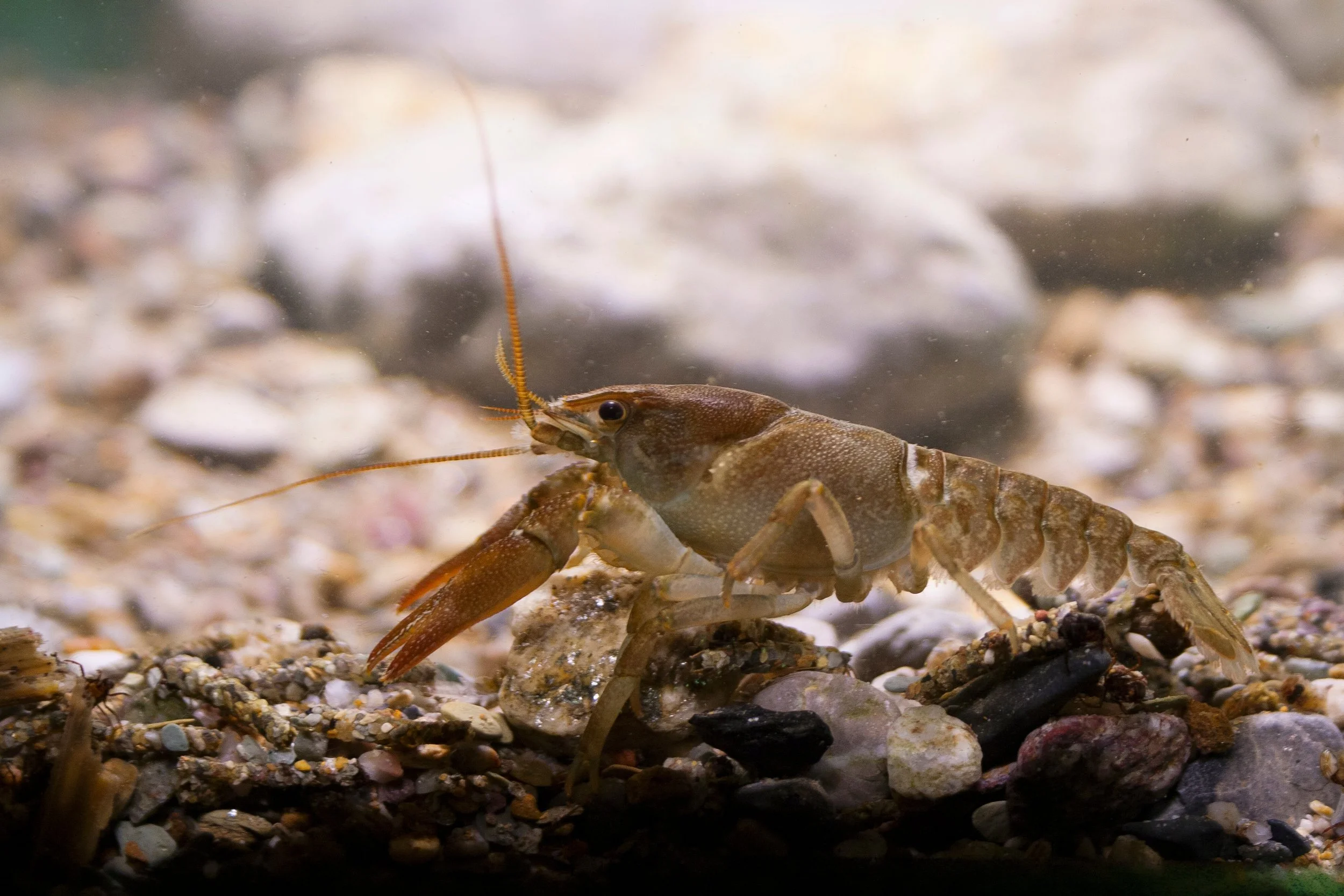
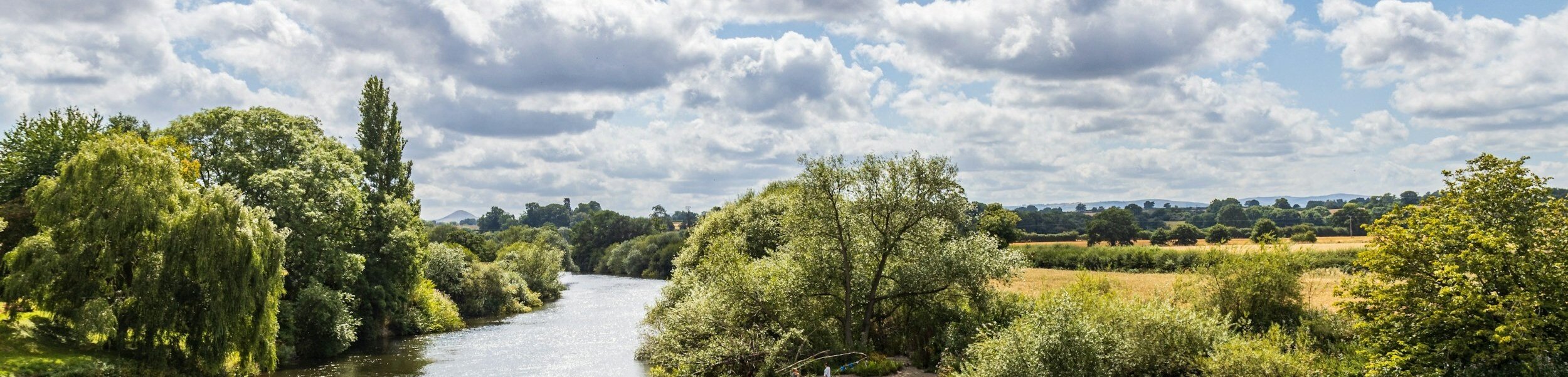
White-clawed Crayfish live in rivers and streams (preferably base-rich) throughout the UK. However, due to the presence of invasive crayfish in Britain, their available habitat area has significantly decreased.
Basic requirements for White-clawed Crayfish survival include:
Suitable refuges (e.g. stones)
Food supply (e.g. leaf litter, macrophytes, aquatic invertebrates, fish remains)
Access to other populations for breeding
Good water quality
No competition from non-native crayfish
No crayfish plague (introduced by non-native crayfish)
Crayfish are susceptible to predation (particularly as juveniles and after molting), which makes suitable refuges of utmost importance. Refuges must be fully submerged, sizeable enough to cover crayfish, aerated, resistant to high water flows and available for occupation.
Environmental DNA or eDNA is a new technology for surveying for crayfish. Water samples are collected from the stream or river and sent to a special laboratory for DNA analysis. This method is much better for determining the absence of White-clawed Crayfish in a water body because it is quicker, less expensive, has a wider survey time window and is less invasive for the animals themselves.
However, eDNA cannot measure the estimated population of crayfish present, which is required for an EPS Licence. Therefore if the eDNA test is positive, further Phase II Surveys are required to inform a European Protected Species Licence application.
eDNA surveys

What a White‑Clawed Crayfish Survey Includes
A typical white‑clawed crayfish survey may involve:
Desk study and habitat assessment to identify aquatic features and potential crayfish habitat
Field surveys using standard techniques such as hand searching, netting, and refuge examination
Recording evidence of crayfish presence (e.g., sightings, molts, burrows)
Mapping of habitat features and distribution within the survey area
Assessment of potential impacts from proposed development
Recommendations for mitigation or avoidance measures, proportionate to site risk
Survey scope is tailored to site characteristics and development context to provide evidence suitable for planning submissions.
Phase II White-clawed Crayfish surveys
A Phase I survey does not require any licences to survey waterbodies. However, if White-clawed Crayfish may be present on the site, Phase II surveys may only be undertaken by a trained ecologist with a survey licence for them.
The standard method of surveying for White-clawed Crayfish is a manual search of potential refuges within the survey area. However, this method can only be undertaken where the water depth is no more than 60cm and it is safe to do so. Alternative methods such as trapping may also be used if the standard method is not possible but can be more invasive and labour-intensive. Surveys have a limited season and are best undertaken in July to September after they have released their young.

Survey Timing & Why It Matters:
White‑clawed crayfish surveys are seasonal because detectability varies with water temperature, flow conditions and habitat use. Survey methods are usually conducted between May and October, when crayfish activity is greatest and evidence is more reliably detected. Conducting surveys during the appropriate season ensures robust results that planning authorities can use to assess ecological impacts and mitigation needs, and helps avoid the need for additional survey work later in the process.
White-clawed Crayfish & development
Development that would impact populations and habitats of White-clawed Crayfish must include a detailed avoidance, mitigation, compensation and enhancement strategy. To meet planning policy, the development will only be allowed if it provides a net benefit to the species. Habitat restoration and modification of features to benefit White-clawed Crayfish may be used.
FAQ’s
-
Surveys are usually required where proposed works could affect watercourses or aquatic habitats that may support white‑clawed crayfish. Suitable habitat alone can trigger a survey requirement.
-
Crayfish surveys are usually undertaken between May and October, when water temperatures and crayfish activity are highest and evidence is more readily detected.
-
If presence is confirmed, mitigation or avoidance measures may be required. Our survey reports provide practical guidance on mitigation, planning submissions and any necessary licence considerations.
Have more questions?